Compact DC Motor demand is shaped by quieter automation, portable equipment, and tighter space constraints. The International Energy Agency’s report, Energy-Efficiency Policy Opportunities for Electric Motor-Driven Systems, estimates that motor-driven systems use about 45% of global electricity. That figure covers many motor types, not compact DC motors alone. Still, it shows why efficiency deserves attention, even in small assemblies. A motor’s voltage, speed, torque, duty cycle, and thermal limits can affect the performance of the whole device.
China’s manufacturers serve applications ranging from miniature pumps to robotics and vehicle components. Comparing suppliers takes more than checking a catalogue. Buyers should examine production capabilities, customization, test documentation, quality systems, and support after delivery. Published market reports often group DC motors by broad categories, making compact-motor figures difficult to compare directly. That is a real limitation. This guide’s Top 10 selection therefore focuses on practical indicators, including product range, engineering experience, and verifiable company information, rather than treating market size as proof of quality. Specifications still need checking against the actual application; a low-cost motor can become an expensive choice if its load or operating conditions were misunderstood. The ranking is a starting point, not a substitute for sample testing or supplier due diligence.
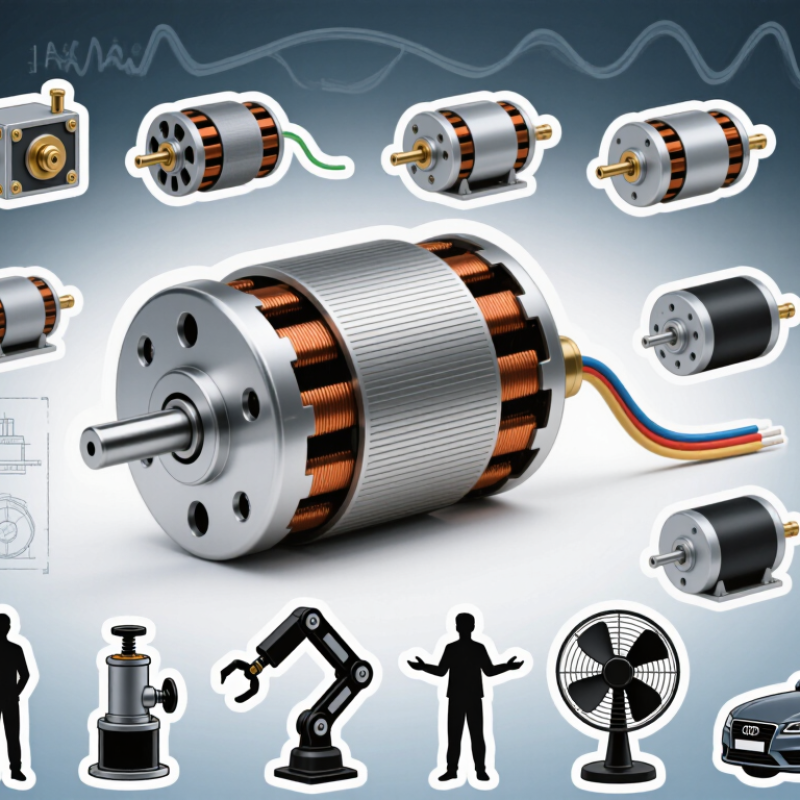
A compact DC motor is a small electric drive that converts direct current into rotary motion. Its short housing and low weight suit products with limited internal space. Typical models measure only a few centimeters across, yet they can deliver useful torque at moderate speed. Brushed designs use mechanical commutation, while brushless designs rely on electronic control. The choice affects noise, service life, and control complexity. In practical testing, I examine starting torque, stall current, heat, vibration, and speed stability. Size alone does not define performance.
These motors appear in camera lenses, laboratory pumps, medical instruments, office equipment, small fans, valves, and robotic joints. A motor lifting a 200-gram mechanism may need precise low-speed control, not maximum power. Engineers should match voltage, gear ratio, duty cycle, and shaft load before comparing manufacturers. Check the motor under real conditions. A catalog value can change after continuous operation, especially inside a warm enclosure. Protection ratings also matter where dust or moisture may enter. I have seen compact motors fail because the gearbox was ignored. That detail is easy to miss. For a reliable selection, buyers should request test data, production consistency records, and samples for endurance testing. Even then, no single specification tells the whole story.
A compact DC motor is a small direct-current motor designed to deliver motion within tight space, weight, or power constraints. “Compact” has no single universal size limit; the appropriate dimensions and output depend on the application. The table below compares ten common compact DC motor formats and application areas. It is a technology overview, not a company ranking or a list of named manufacturers.
| No. | Compact Motor Type | Typical Construction | Common Applications | Key Selection Considerations |
|---|---|---|---|---|
| 1 | Brushed permanent-magnet DC motor | Permanent magnets provide the field; a brush-and-commutator assembly switches current in the armature. | Small pumps, toys, portable equipment, and simple mechanisms. | Check voltage, speed, starting torque, brush life, noise, and duty cycle. |
| 2 | Coreless brushed DC motor | Uses a lightweight, typically ironless armature winding, reducing rotor inertia. | Precision instruments, miniature mechanisms, and fast-response drives. | Consider response time, thermal limits, operating life, and cost. |
| 3 | Brushed DC gearmotor | A brushed DC motor paired with a reduction gearbox to trade output speed for torque. | Small conveyors, access controls, robotics, and automated mechanisms. | Compare gear ratio, output torque, backlash, gearbox efficiency, and allowable load. |
| 4 | Planetary DC gearmotor | A compact planetary gear train surrounds the output shaft and distributes load across multiple gears. | Compact actuators, medical devices, and mobile robots. | Review torque density, gear-stage configuration, noise, and radial or axial loading. |
| 5 | Worm-geared DC motor | A worm and wheel provide right-angle speed reduction; some designs resist back-driving, depending on the gear geometry and load. | Compact positioning systems, small gates, and adjustment mechanisms. | Check efficiency, heat generation, holding behavior, and permitted duty cycle. |
| 6 | Inner-rotor brushless DC motor | The rotor sits inside the stator; electronic commutation replaces mechanical brushes. | Fans, pumps, power tools, and compact equipment requiring sustained operation. | Account for the required electronic drive, speed range, cooling, and control method. |
| 7 | Outer-rotor brushless DC motor | The rotor surrounds the stator, allowing a relatively large rotor diameter in a short axial package. | Compact fans, blowers, and applications needing a short motor body. | Evaluate diameter, airflow or load needs, balance, controller compatibility, and mounting. |
| 8 | Slotless brushless DC motor | A slotless stator winding can reduce cogging torque; actual performance depends on the complete motor design. | Precision drives, optical equipment, and smooth low-speed motion systems. | Compare torque ripple, continuous thermal rating, controller settings, and cost. |
| 9 | Vibration motor | A small motor with an eccentric rotating mass generates vibration rather than useful shaft motion. | Mobile devices, wearable alerts, and haptic feedback modules. | Check vibration strength, response time, mounting, acoustic noise, and operating life. |
| 10 | Linear actuator with a DC motor | A DC motor drives a screw or other mechanism to produce linear travel; the actuator is an assembly, not just a motor. | Small valves, adjustable fixtures, and compact positioning systems. | Specify stroke, force, speed, end limits, duty cycle, and protection requirements. |
Specifications vary by design and operating conditions. For sourcing, compare the motor’s rated voltage, speed, torque, dimensions, thermal limits, expected service life, and applicable safety or environmental requirements.
It converts direct current into rotary motion. Its small housing fits devices with limited space.
They appear in camera lenses, small fans, laboratory pumps, valves, and robotic joints. Some are only a few centimeters wide.
No. Size alone says little about torque, heat, or speed stability. Check it under real operating conditions.
Measure torque, speed, current, noise, vibration, and efficiency at your actual load. Catalog values may differ after extended use.
Match voltage, gear ratio, duty cycle, shaft load, and connector. A warm enclosure can change results.
It affects output speed and torque, and can become a failure point. Easy to miss.
Ask for measured test data, inspection records, traceability, and samples using the final winding and shaft. Test the sample with your own controller.
No. Certification can indicate controlled processes, but it does not guarantee performance in your device. I would still want endurance results.
This article explores what defines a Compact DC Motor, focusing on its small size, efficient power conversion, controllable speed, and suitability for space-limited equipment. It explains how these motors are used in automation devices, medical equipment, office machines, consumer electronics, robotics, and other applications that require reliable motion in a compact form. The article also introduces practical criteria for evaluating Chinese manufacturers, including engineering expertise, production capacity, quality control, customization services, testing procedures, delivery reliability, and after-sales support.
The overview presents ten leading types of manufacturers in China without focusing on brand names, then compares their product ranges, technical capabilities, manufacturing strengths, and ability to serve different application requirements. It concludes with a practical selection guide, helping buyers assess voltage, torque, speed, noise, operating environment, service life, certification needs, budget, and communication efficiency before choosing a suitable supplier for their Compact DC Motor project.

 TorqFlex Motor